pre-conference
Workshops
Four workshops will be hosted at iBOL 2026 on Monday, November 2, at the Siam Kempinski hotel. Two workshops will be held concurrently in the morning, and two will be held concurrently in the afternoon. Workshops have a limited capacity based on room size, and early registration is encouraged. Those interested in participating must register for the workshops during conference registration. There is a nominal ($10 USD) fee for each workshop to offset the cost of room rentals.
For a live updated detailed program, please see the Conference Program.
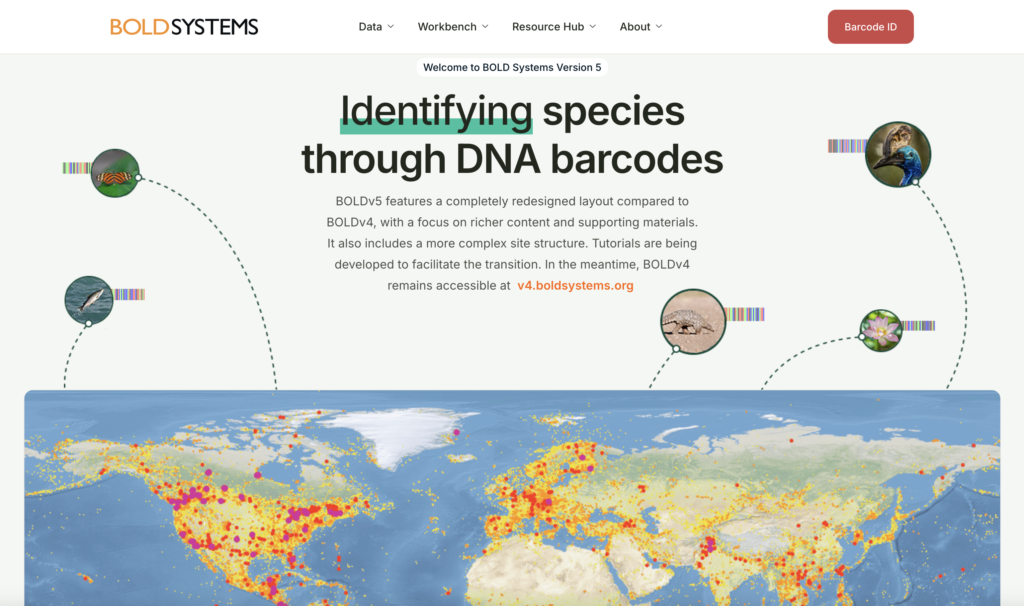
Advancing Biodiversity Data Management: New Features, Infrastructure, and Workflows in BOLDv5
Monday 2 November, 9:00 AM - 12:30 PM
Facilitators: BOLD Informatics Team
Summary: In this session, BOLD staff will introduce the latest developments in BOLDv5, highlighting major platform enhancements, new analytical tools, improved submission pipelines, and expanded interoperability with global biodiversity data repositories. Through a series of focused talks, participants will gain insight into the new features, APIs, workflows, and supporting resources designed to improve data submission, curation efficiency, user experience, and access at scale to BOLDv5 services. Each presentation will be followed by dedicated time for community feedback and engagement.
Bring Your Metabarcoding Data and Turn It Into a Visible, Citable Research Output on GBIF.org
Monday 2 November, 9:00 AM - 12:30 PM
Facilitators: GBIF Team
Summary: This hands-on workshop will teach participants how to transform metabarcoding data into visible, citable research outputs by publishing OTU/ASV tables, sample metadata, sequences, and taxonomic assignments through GBIF using the Metabarcoding Data Toolkit. Participants will learn to format and standardize their data for discoverability alongside other biodiversity resources, gaining a DOI and access to GBIF’s citation and literature-tracking systems that connect datasets to downstream research applications. The workshop will focus on publishing interpreted species occurrences to contribute to the global biodiversity data pool, with practical guidance on data-sharing practices and an overview of current tools and standards for sequence-based data on GBIF. Participants are encouraged to bring their own OTU/ASV tables and metadata, with the goal of leaving with a published dataset.
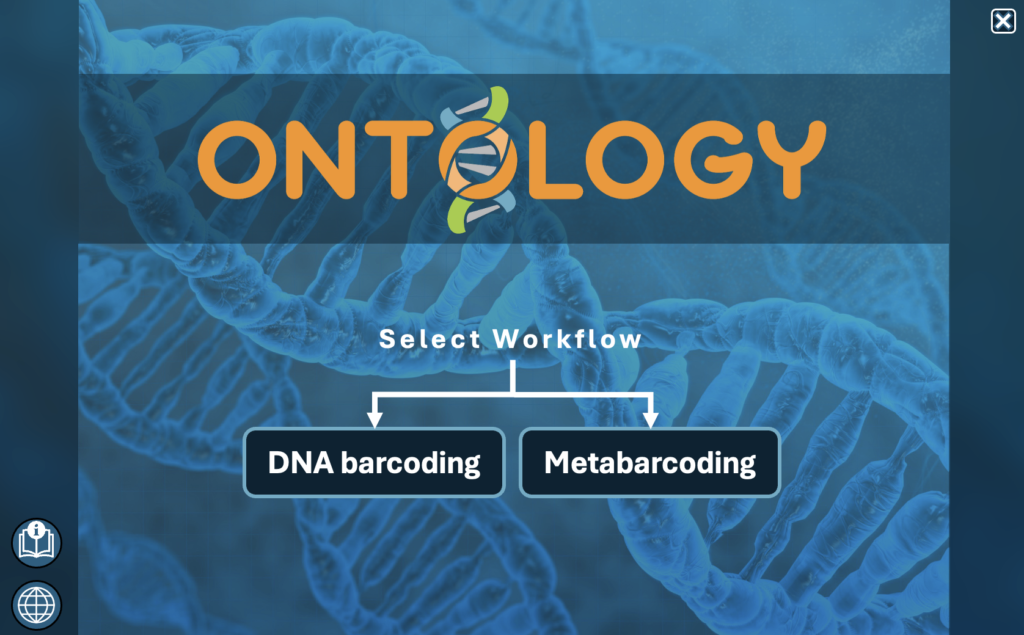
DNA Barcoding and Metabarcoding With ONTOLOGY™
Monday 2 November, 2:00 PM - 5:00 PM
Facilitators: ONTOLOGY™ Development Team, CBG (Sean Prosser, Robin Floyd, Ken Thompson)
Summary: This half-day workshop will introduce participants to ONTOLOGY™: an integrated platform that simplifies DNA barcoding and metabarcoding by combining freeze-dried PCR plates containing indexed primers with automated bioinformatics software. Led by the ONTOLOGY Development Team from CBG’s Innovation Unit, the hands-on session will guide participants through both barcoding and metabarcoding workflows—from setting up runs in standard and advanced modes to interpreting results and submitting data to BOLD—as well as cover customization options for primers, indices, and reference libraries. Participants will need to bring laptops running macOS, Ubuntu, or Windows with pre-downloaded software and example data. Discussions sections will go over protocols implemented in the molecular lab. The developers will collect feedback from participants that will be used to guide development.
AI for Biodiversity Research: Multimodal Methods for Taxonomic Discovery
Monday 2 November, 2:00 PM - 5:00 PM
Facilitators: University of Guelph, Vector Institute, Simon Fraser University, University of Waterloo (Iuliia Eyriay, Dirk Steinke, Graham Taylor, Angel Chang, Niousha Sadjadi, Scott Lowe, Lila Kari, Monireh Safari)
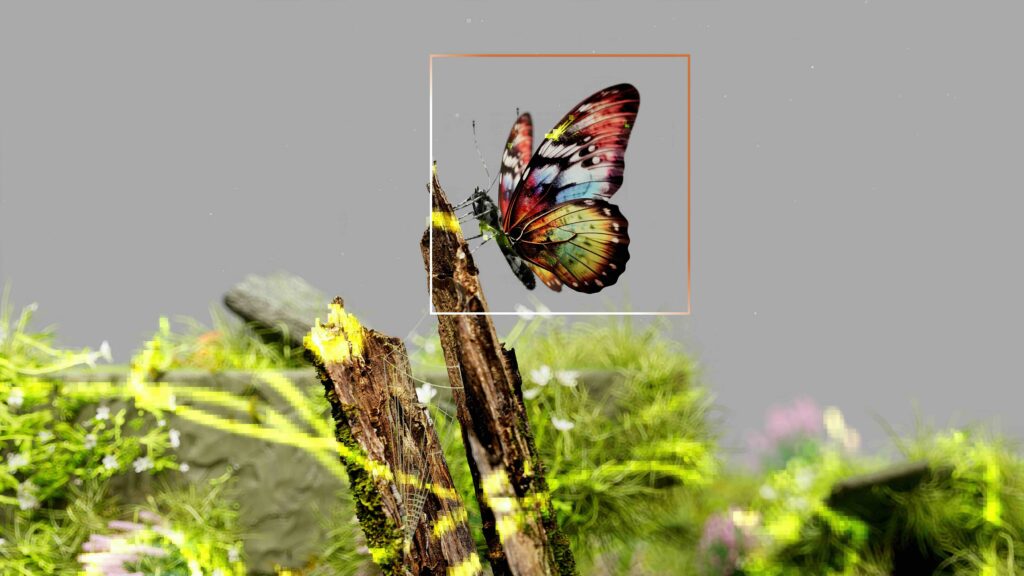
Summary: This half-day workshop explores the application of multimodal artificial intelligence to biodiversity research, focusing on how combining heterogeneous data streams—such as images, DNA barcodes, acoustic recordings, traits, and environmental metadata—within unified learning frameworks can enhance taxonomic classification, particularly for understudied or data-poor taxa. The session is structured around three components: a hands-on tutorial on inference with pretrained AI models for bioinformatics; a second hands-on tutorial introducing agentic AI workflows; and a collaborative challenge design session combining a short presentation with guided breakout discussions to identify shared use cases, data needs, and community priorities for advancing this field. Participants should bring laptops and are expected to have basic proficiency in R or Python. Prior experience in machine learning is helpful but not required.
Learn more about iBOL
The International Barcode of Life Consortium is a research alliance undertaking the largest global biodiversity science initiative: create a digital identification system for life that is accessible to everyone